Case Studies
How to Prove Real Event ROI: WebZero Launches RFID Wristbands
We deployed RFID wristbands at ETHDenver 2026 and passively measured visitors across 6 days, capturing dwell time, return rates, and real-time occupancy that QR check-in platforms can't measure. Here's what the data showed and why it matters for event ROI.
SHARE
PUBLISHED
Author
WebZero
Why Event Attendance Data from Luma is Incomplete
Disclaimer: Unlike other chip-based tracking technologies, RFID wristbands never store personal data on the device.
Every event organiser has faced this problem. The venue felt packed. A sponsor asks "how many people actually came?" and you don't have a confident answer.
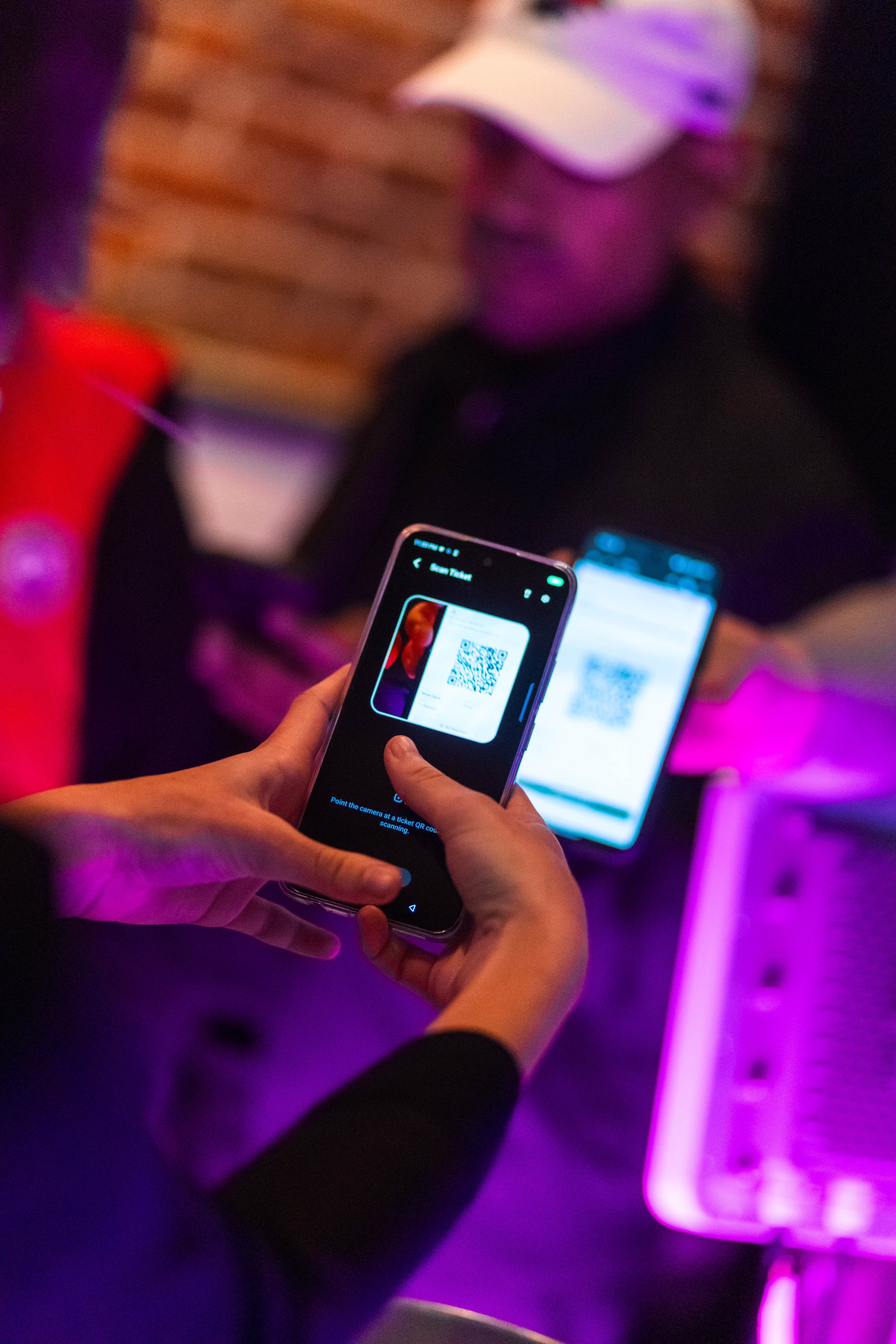
This isn't a failure of execution. It's a structural limitation of how platforms like Luma, Eventbrite, and Splash measure attendance. QR-based check-in systems count one thing: the moment someone scans a code at the door. They don't record when that person left. They don't know if someone came back the next day without scanning again. They can't tell you how many people are in the building right now.
That means event organisers are making blind sponsorship pitches with data that amounts to a headcount. No dwell time. No return rate. No occupancy curve. No engagement profile.
RFID wristbands solve this by tracking attendees passively and continuously, from the moment they enter to the moment they leave, across every day of a multi-day event.
What Are RFID Wristbands for Events and How Do They Work?
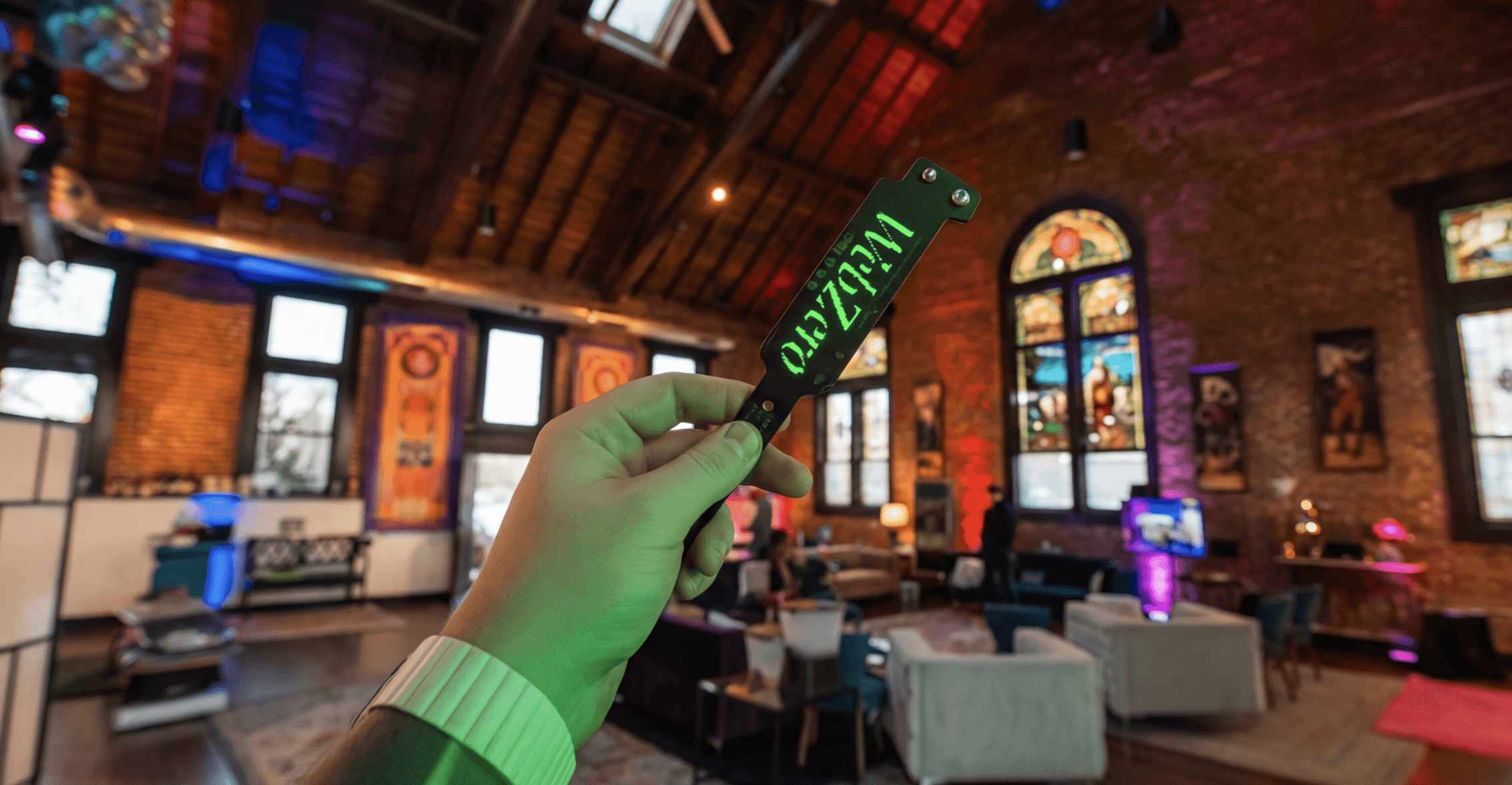
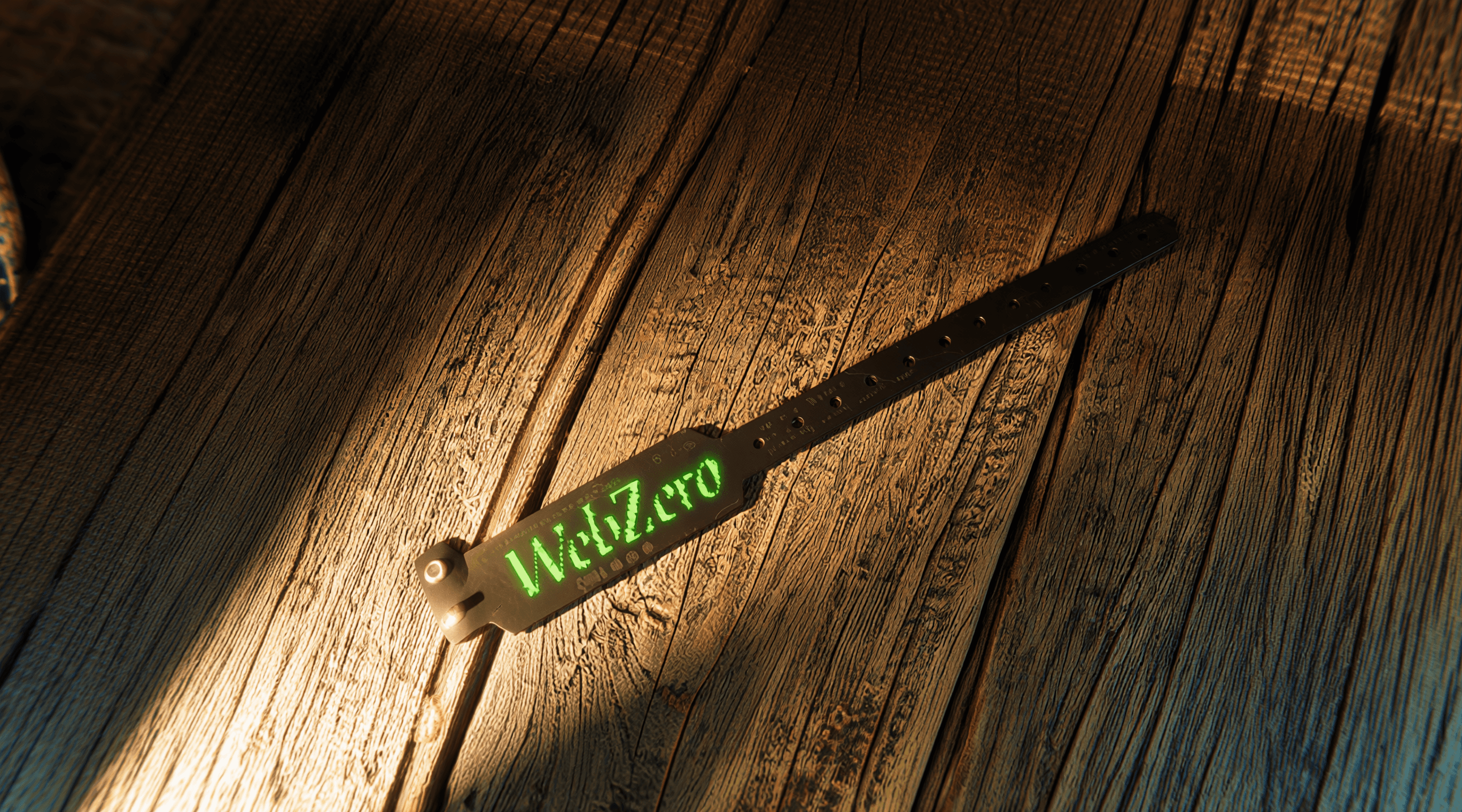
RFID (Radio Frequency Identification) wristbands use embedded UHF chips that communicate wirelessly with readers placed at venue entry points and throughout event spaces. Unlike QR codes, NFC tap-ins, or manual check-in, UHF RFID is fully passive — guests don't need to stop, scan, or tap anything. The reader detects the wristband automatically as the person walks through a doorway.
Here's how WebZero's system works at an event:
At check-in: Each guest receives an RFID wristband linked to their registration record (currently integrated with Luma via webhook, extensible to any platform). The wristband is associated with the reader in seconds.
During the event: UHF portal readers mounted at entrances detect every entry and exit automatically. The system tracks direction (IN/OUT), timestamps each read, and logs it to a local database. No internet dependency, everything runs on a local network.
After the event: The data feeds into analytics that produce dwell time per visitor, multi-day return rates, peak occupancy curves, and daily attendance breakdowns. These are metrics that registration platforms structurally cannot provide because they only record a single check-in moment.
ETHDenver 2026 Deployment: The Test
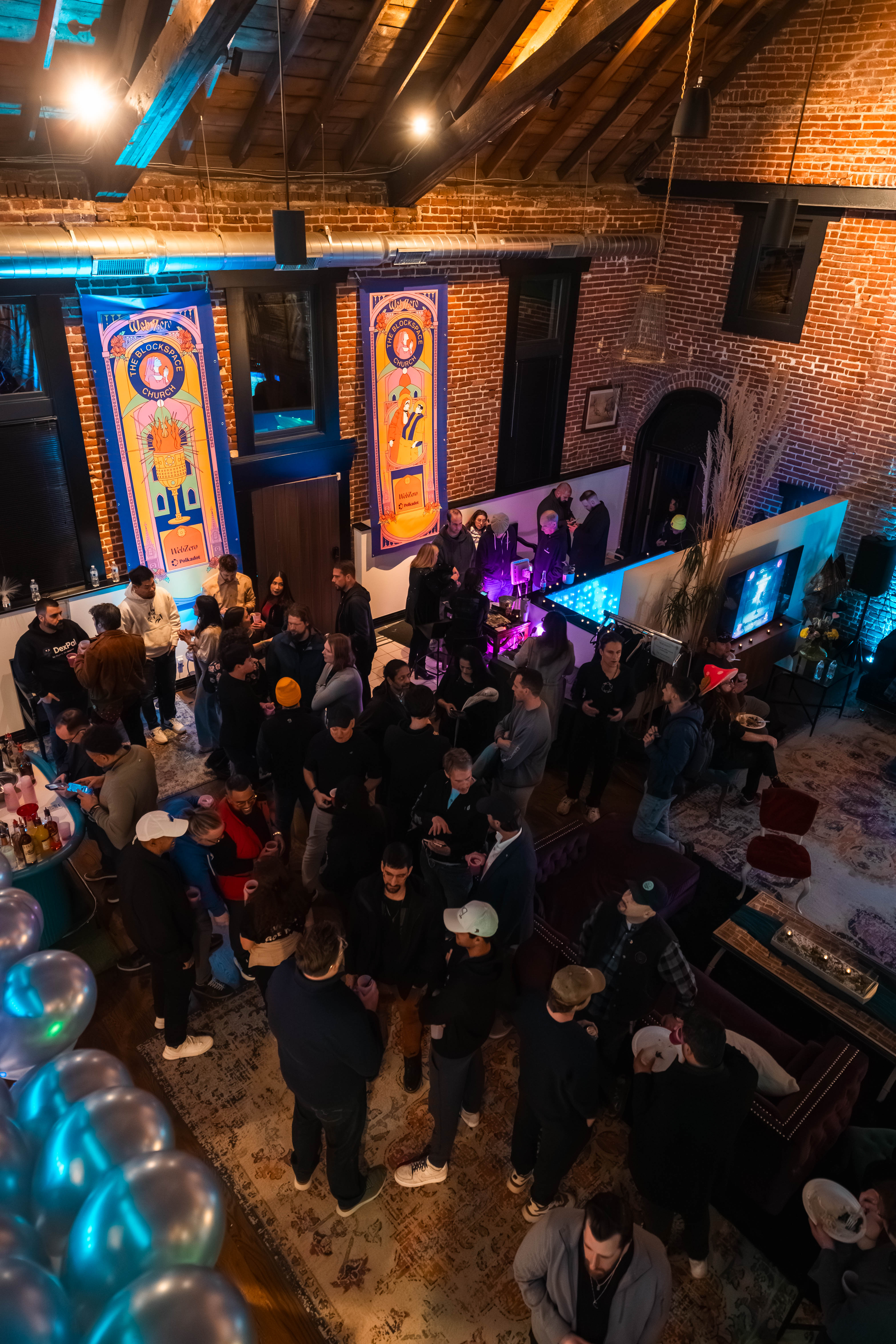
We ran this system at The Blockspace Church, a 6-day side-conference during ETHDenver 2026 (February 16–21). The venue hosted 20 total events, 14 hosted by WebZero and 6 co-hosted with partners. Event types included co-working days, a poker night, a vibe coding contest, a devrel lodge, demoday, listening parties, and a closing party.
Every guest who checked into a WebZero-hosted event received an RFID wristband. The portal readers at the entrance detected them automatically on every subsequent entry and exit for the rest of the week.
RFID Attendance Tracking Results: What the Data Showed
RFID Confirmed 100% of QR Check-Ins — and Found More
Source | Unique Visitors |
|---|---|
Luma QR check-ins (WebZero events) | 647 |
RFID-confirmed visitors (linked wristbands) | 655 |
Every single Luma check-in was corroborated by RFID. The additional 8 visitors were guests who received wristbands but never completed the Luma QR scan — people a QR-only system would have missed entirely. The RFID readers detected them before they even reached the registration desk.
Multi-Day Return Rate: 22.3% (vs. 16.4% from Luma)
Days Attended | Visitors | Percentage |
|---|---|---|
1 day | 509 | 77.7% |
2 days | 108 | 16.5% |
3 days | 26 | 4.0% |
4+ days | 12 | 1.8% |
RFID measured a 22.3% multi-day return rate — 1.4 times higher than what Luma reported. The gap exists because QR check-in platforms only record the first scan per event. When someone returns the next day and walks straight in without scanning, they're invisible to the platform. RFID catches them automatically because the wristband is passive.
This gap would be even larger at events where all guests receive wristbands on day one. At ETHDenver, most banding happened mid-week, so the system only captured return visits for guests who came back after their initial banding day.
Why this matters: return visitors are the most engaged segment of your audience. They're the people sponsors most want to reach and the strongest signal of event quality. Without RFID, you can't count them accurately.
Dwell Time: How Long Attendees Actually Stayed
This is the metric that QR check-in platforms cannot provide at all. Registration systems record when someone arrives. They never record when someone leaves. RFID tracks both passively, for every visitor, on every visit.
Metric | Per Visit |
|---|---|
Median dwell time | 56 minutes |
Mean dwell time | 1 hour 44 minutes |
Visitors staying 6+ hours | 6.6% |
The median per-visit dwell time was under an hour, most people came for a specific event or activity and left. The mean is pulled up by the long tail: co-working guests who arrived at noon and stayed through evening programming.
Per-visitor total dwell across the full week was a median of 1 hour and a mean of 2.2 hours. The 22% of visitors who returned on multiple days accumulated significantly more total venue time than single-day attendees.
For sponsor conversations, this transforms "we had 647 guests" into "our median guest stayed 56 minutes, our co-working crowd averaged 3+ hours, and 6.6% spent more than 6 hours at the venue." That's not an attendance report. That's an engagement profile, and it's the difference between a one-time sponsorship and a renewal.
Real-Time Peak Occupancy
The closing party (February 20) peaked at 78 people in the building simultaneously at approximately 6:45 PM, with about 56 still present at 9 PM. This kind of real-time occupancy data enables capacity management during the event and gives organizers a granular view of crowd flow that no registration platform provides.
The Full Registration-to-Attendance Funnel
The headcount delta between RFID and Luma is small (+8). The insight delta is enormous. Luma tells you 647 people checked in. RFID tells you that people stayed a median of 56 minutes per visit, 22.3% came back on multiple days, the closing party peaked at 78 simultaneous guests at 6:45 PM, and the co-working crowd stayed 3x longer than the evening-event crowd.
Every figure in this post reflects the fully cleaned dataset.
RFID vs. QR Check-In for Events: Key Differences
Capability | QR Check-In (Luma, Eventbrite) | RFID Wristbands (WebZero) |
|---|---|---|
Headcount | Yes | Yes |
Passive (no guest action) | No — requires scanning | Yes — automatic detection |
Dwell time tracking | No | Yes |
Multi-day return tracking | Limited — first scan only | Yes — continuous across all days |
Real-time occupancy | No | Yes |
Exit tracking | No | Yes |
Works without internet | Depends on platform | Yes — local network |
Guest friction | QR scan + wait in line | Walk through entrance |
Who Should Use RFID Wristbands for Event Tracking?
Venues and event spaces that need real-time occupancy monitoring for capacity management and safety compliance. Historical dwell data also reveals which event types drive the longest stays and highest return rates, enabling smarter programming and pricing decisions.
Sponsors and exhibitors who want to know exactly how many people were in the building during their activation, how long they stayed, and whether they came back. This is the difference between "brand awareness" and measurable, timestamped exposure.
Multi-day festivals and conferences where return visits are a key engagement signal. QR check-in misses return visitors who walk in without scanning. RFID captures every re-entry automatically.
What WebZero's RFID System Includes
Shipping now:
Passive UHF RFID tracking — guests wear a wristband, walk through the entrance, and are tracked automatically with no scanning or app required
Luma integration — wristbands link to guest registration records via webhook
Real-time Telegram alerts — reader health, system status, and anomaly notifications pushed to your ops team
Tablet admin panel — reader configuration, dB gain adjustments, and system health managed from a tablet at the venue
Live debug dashboard — walk past the gate with a wristband and see instantly whether the read was detected and which reader fired
Coming soon:
Real-time occupancy dashboard - live headcount displayed on a screen at the entrance with capacity threshold alerts
Multi-zone tracking - readers in every room to track which sessions attendees visit, how long they stay at sponsor booths, and how crowds migrate throughout the day
Automated noise filtering - stale tags and ambient noise detected and excluded from counts in real time
Sponsor-ready analytics package - post-event reports generated automatically with engagement profiles, peak times, return rates, and dwell distributions
Get RFID Wristbands for Your Next Event
The Blockspace Church deployment at ETHDenver 2026 was our proof of concept. The hardware works, the data pipeline is validated, and the engagement metrics it produces go far beyond what any QR check-in platform can offer.
If you're running conferences, festivals, corporate events, or managing a venue and want attendance data that actually means something, we'd love to talk.