Case Studies
How we used our own data to win a headline sponsorship
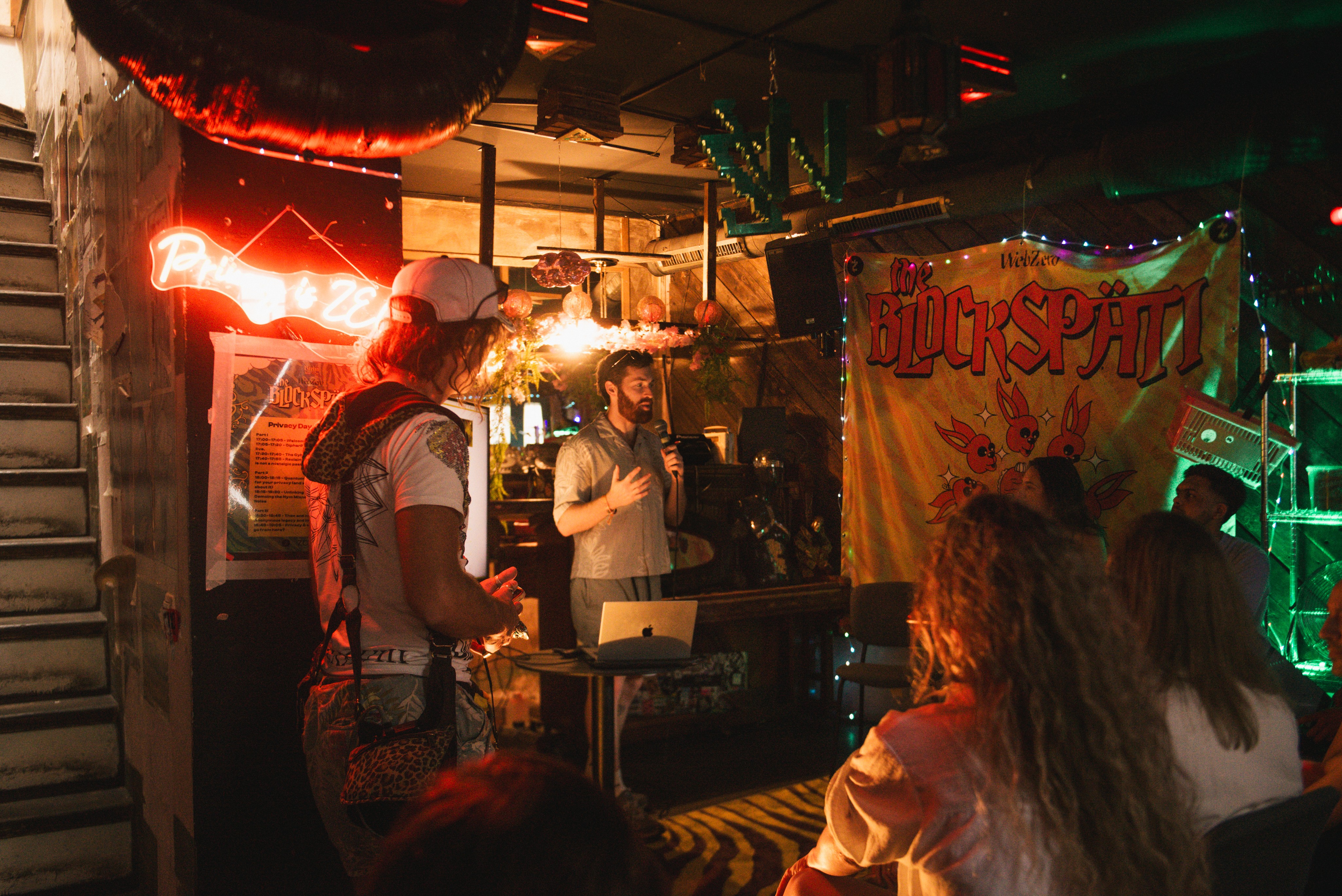
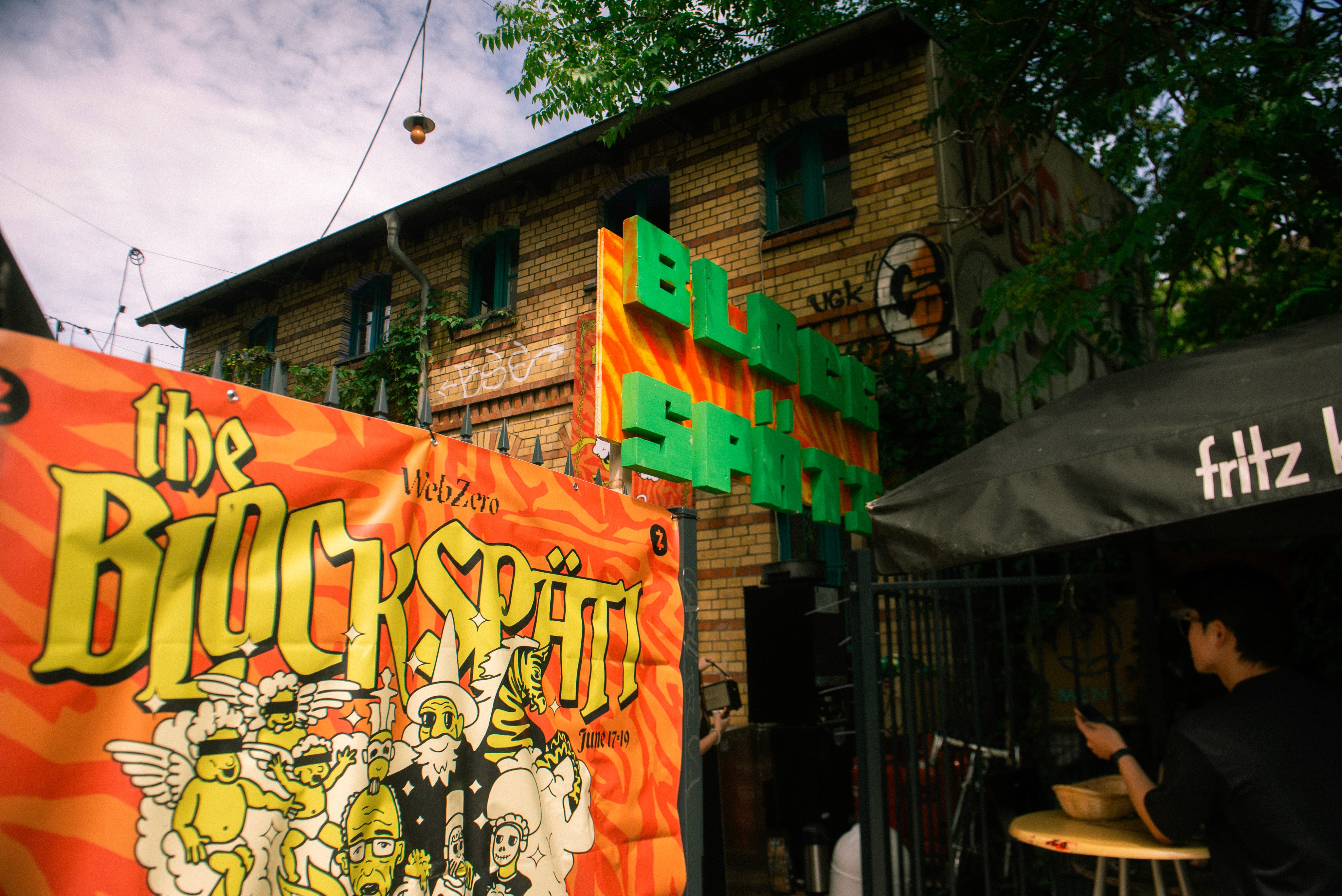
The Blockspäti ran June 17 to 19 at MENA in Kreuzberg, third year running, with our lead sponsor taking over the building. 930 people came through across three days. Ten-plus side events, a hackathon, a vendor market, three raves, a fashion show, a run club, and a tattoo artist taking payment in crypto.

SHARE
PUBLISHED
Author
Polar
Berlin Blockchain Week: where Polar earned its place
The Blockspäti ran June 17 to 19 at MENA in Kreuzberg, third year running, with our lead sponsor taking over the building. 930 people came through across three days. Ten-plus side events, a hackathon, a vendor market, three raves, a fashion show, a run club, and a tattoo artist taking payment in crypto.
That's the fun version. This post is the other one: what our own GTM tooling did across the seven months of work that led to those three days.
We build Polar. We also run events. That means we use the product under real pressure, on a real budget, with a real sponsor waiting on results. Here's where it mattered.
Before the event: winning the sponsorship with last year's data
The single highest-leverage thing Polar did all cycle happened before a wristband was printed.
Standard problem for any event team pitching a sponsor: you're asking someone to fund a room full of people who don't exist yet. Most proposals solve this with adjectives.
Instead we logged into Polar and pulled the full picture of everything we'd hosted during Berlin Blockchain Week 2025. Total attendance across the programme. Audience composition as percentages, not vibes. Which events overperformed and which didn't. Repeat attendance across the run of days.
That went straight into the proposal. We could write that the Blockspäti format had pulled 912 unique attendees and a 4.8 out of 5 Luma rating the previous year, and back it with a real reporting layer rather than a screenshot of a Luma page. The pitch stopped being "trust us, we throw a good party" and became "here is the audience you are buying, sized and segmented."
The application was approved, and it funded the team and the activation itself. Relationships and track record do most of the work in any sponsorship conversation. What the data does is give a committee something concrete to sign off on, and that's a real job for a GTM tool.
Worth noting for anyone selling sponsorships: the metric that moved people wasn't headcount. It was audience composition. "Roughly six in ten attendees are developers or founders" is a sentence a sponsor can take to their own leadership.
During the run-up: watching the campaign build
Through the eight weeks of marketing before the event, Polar was the place we checked to see registration and attendance building, and to read which pushes were landing.
That read shaped decisions. Our partnership with Crypto Nomads, which put the main day at the top of their Berlin Blockchain Week directory, ended up accounting for 10% of all registrations. The full set of Luma listings generated 14,889 impressions across the side events, with the main day and the opening and closing parties leading and the smaller sessions keeping the venue busy in between.
Knowing which listings and partners are producing registrations is what tells you where to spend the last two weeks of attention. For a multi-venue, multi-event programme, that's the difference between a full room at 2pm on a Thursday and an empty one.
On the ground: wristbands and repeat attendance
This is where the RFID side did something a registration platform structurally cannot. Registration tells you who signed up. Check-in tells you who walked in once. Neither tells you who came back.
Scanning across three days meant we could see that one in five wristbands on the main day belonged to someone who had already been in the building. That's a retention signal, and for a multi-day format it's arguably the most important number there is. A three-day event that pulls three separate one-day crowds is a very different product from one that builds momentum. Ours built momentum.
It also fed the sponsor report directly, with verified attribution for the wallet onboards rather than a hand count at the door.
After the event: turning a weekend into a standing asset
930 attendees is a number. The audience behind it is the asset.
Half the room were returning attendees from previous WebZero events, and half were new. Of the people surveyed on the main day, close to six in ten described themselves as developers, technical founders, or founders, with marketing and business development adding another fifth. Around one in five had never encountered our lead sponsor's project before walking in.
Those splits are what make the next event easier to sell and easier to fill. Every Berlin touchpoint now starts from a larger, warmer base, and we can describe that base precisely rather than approximately.
The follow-up campaigns went out to that pool: 10,000 personalised invites across the side events, a pre-event send at a 49.3% open rate and 14.4% click rate, and a post-event send at 42.8% open and 19.9% click. The event ended with a 4.5 out of 5 rating, over 200,000 impressions across channels, and three Berlin merchants onboarded to take crypto payments at the market.
What's next
Three things we're building toward off the back of this cycle:
Live channel attribution. Registration source tracked per campaign as it happens, so the Crypto Nomads-style wins surface on day three instead of in the wrap report.
Segment sync. Pull a segment in Polar, send from wherever you send, without anything dying in a CSV on the way.
Cross-event cohort views. Following the same people across cities and years is where the value compounds, and it's the thing no single event platform can see.
Berlin was the proof: prove the audience to a sponsor beforehand, verify what actually happened afterwards, and the next room is easier to fill than the last one.
Polar is in open beta. If you run events and want the sponsor report to write itself, [get in touch].